
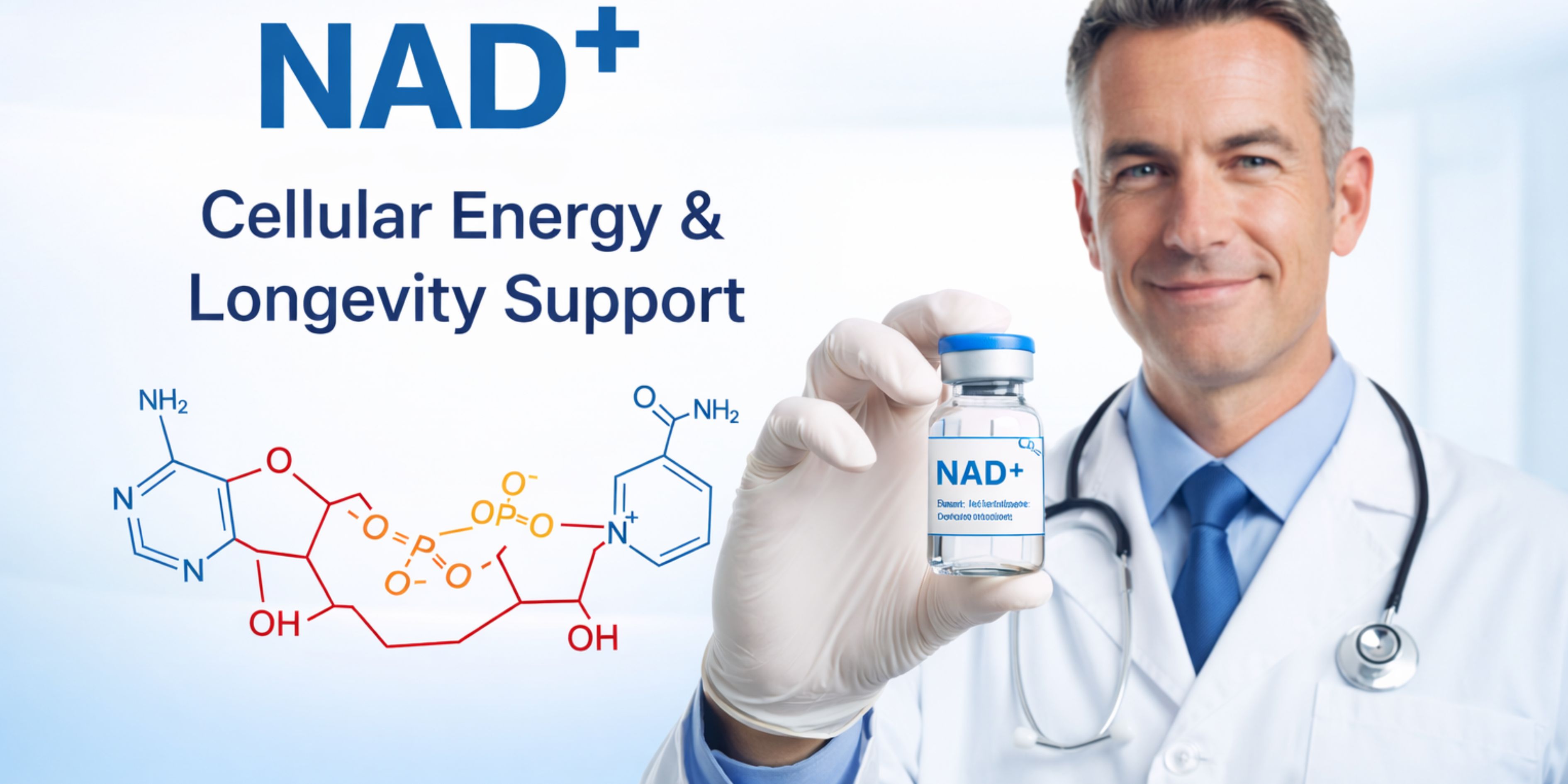
Nicotinamide Adenine Dinucleotide (NAD⁺) is a naturally occurring coenzyme present in every living cell. It plays a central role in cellular energy production, DNA repair, and metabolic regulation. Within a clinical setting, NAD⁺ support is increasingly explored as part of evidence-based strategies aimed at improving cellular efficiency, resilience, and overall healthspan.
As NAD⁺ availability declines with age, chronic stress, inflammation, and metabolic strain, cellular processes that depend on it may become less efficient. In clinical practice, targeted NAD⁺ replenishment—using either precursor-based support or direct NAD⁺ administration—is considered a structured, therapeutic intervention rather than a lifestyle supplement.
What Is NAD⁺ and Why Is It Clinically Relevant?
NAD⁺ is a dinucleotide coenzyme required for hundreds of enzymatic reactions throughout the body. It functions as an electron carrier in redox reactions and acts as a critical substrate for enzymes involved in DNA repair, mitochondrial function, and cellular stress response.
- Cellular energy production: Essential for ATP generation via glycolysis, the Krebs cycle, and oxidative phosphorylation.
- DNA repair mechanisms: Required by PARP enzymes to maintain genomic stability.
- Longevity and resilience pathways: Activates sirtuins involved in metabolic efficiency and cellular adaptation.
Reduced NAD⁺ availability has been associated with fatigue, impaired recovery, metabolic inflexibility, and age-related decline in cellular performance—symptoms frequently encountered in clinical longevity and optimisation settings.
NAD⁺ Decline With Age and Physiological Stress
Research indicates that NAD⁺ levels tend to decrease with advancing age and sustained physiological stress due to increased consumption and reduced synthesis. Although individual variability exists, this decline is commonly associated with reduced mitochondrial efficiency, impaired repair capacity, and diminished cellular resilience.
For patients experiencing chronic fatigue, reduced exercise tolerance, cognitive strain, or accelerated ageing markers, restoring NAD⁺ availability may support improved energy stability, recovery, and cellular function when used as part of a broader clinical programme.
NAD⁺ Replenishment Approaches Used in Clinical Practice
Oral NAD⁺ itself is poorly absorbed. As a result, clinical strategies focus on either precursor-based support or direct NAD⁺ administration, depending on therapeutic goals and patient suitability.
Oral Precursors (NMN / NR)
Nicotinamide mononucleotide (NMN) and nicotinamide riboside (NR) support endogenous NAD⁺ synthesis and may be appropriate for gradual, baseline optimisation. Their effectiveness depends on intact metabolic conversion pathways and consistent use over time.
Injectable and IV NAD⁺ Therapy
Direct NAD⁺ administration bypasses gastrointestinal and enzymatic conversion steps, delivering the active coenzyme systemically. In clinical settings, injectable or IV NAD⁺ protocols are commonly utilised where faster onset or more pronounced physiological support is required.
At The Clinic, NAD⁺ protocols are implemented with appropriate screening, dosing oversight, and clinical monitoring to ensure safety and suitability for each patient.
Safety, Monitoring, and Clinical Oversight
NAD⁺ therapies are generally well tolerated when administered appropriately. Transient effects such as nausea, flushing, or injection-site discomfort may occur, particularly with higher doses or rapid administration.
- Medical assessment and supervision are required
- Dose escalation is approached conservatively
- Product quality, sterility, and handling standards are prioritised
NAD⁺ therapy should always be integrated into a broader clinical strategy addressing nutrition, metabolic health, lifestyle factors, and individual patient goals.
NAD⁺ Therapy at The Clinic
The Clinic offers professionally supervised NAD⁺ therapy designed to support cellular energy, recovery, and longevity-focused outcomes. Treatment plans are individualised and may form part of a wider optimisation or preventative health programme.
- Clinically supervised protocols
- Pharmaceutical-grade NAD⁺ formulations
- Individualised dosing and monitoring
NAD⁺ Therapy at The Clinic
The Clinic offers professionally supervised NAD⁺ therapy designed to support cellular energy, recovery, and longevity-focused outcomes. Treatment plans are individualised and may form part of a wider optimisation or preventative health programme.
- Clinically supervised protocols
- Pharmaceutical-grade NAD⁺ formulations
- Individualised dosing and monitoring
Clinical Disclaimer: This content is provided for educational purposes and does not constitute medical advice. NAD⁺ therapy is not suitable for all individuals and should only be undertaken following appropriate medical consultation.